

It has been a disastrous summer in New Zealand – but not-so-bad in the Bay of Islands.
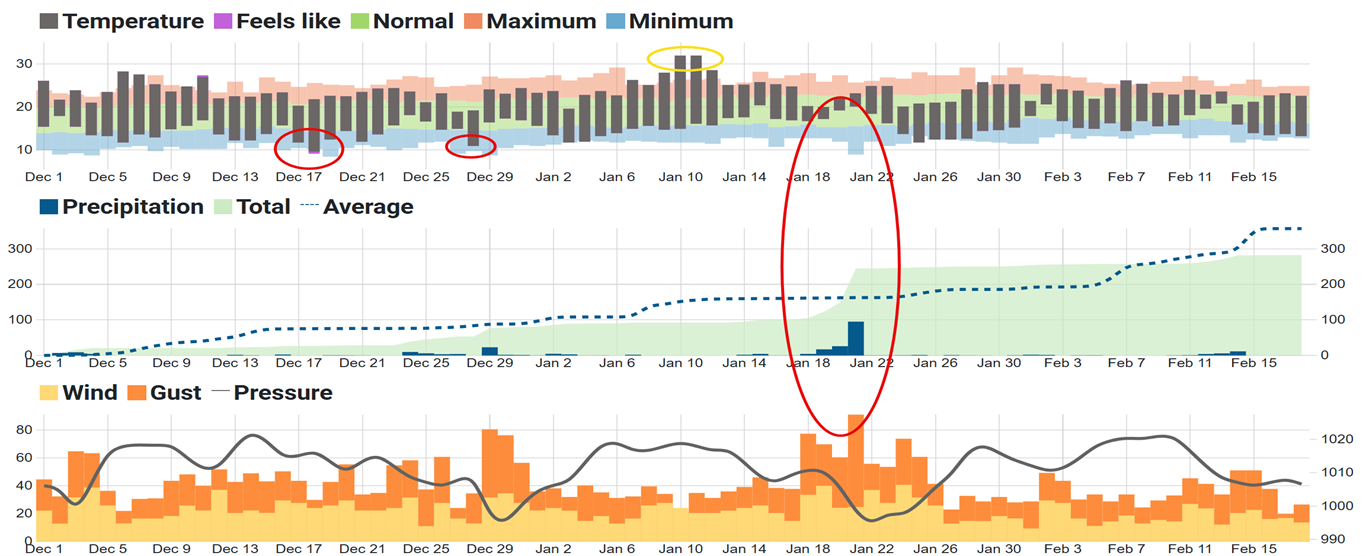
Kerikeri airport data below shows cold wet and windy snaps highlighted with circles. These appeared especially mid-December and between Christmas and New Year, followed by a heat wave on 9 and 10 Jan. The main weather event was the approaching trough on 18 to 20 Jan.

MetBob. Bob McDavitt is the weather guru that uses //etBoB to provide meteorological information for cruising sailors, primarily for those in the South Pacific.
The next image shows the daily averaged isobars over the NZ area for the main part of summer (longitudes 160E to 180 and latitudes 25S to 50S from Dec 1st to Feb 10th). The passing HIGHS usually pace themselves at around once a week with a trough in-between, but that New year trough and 18-26 Jan trough stand out as bucking the pattern.
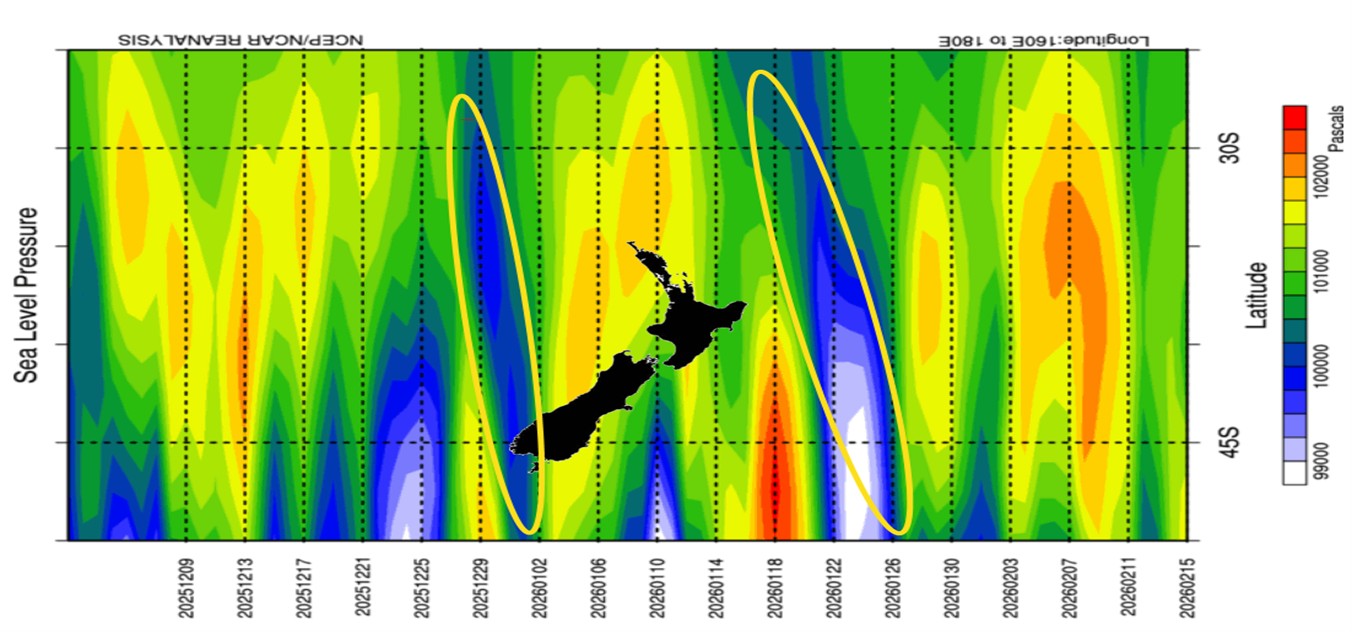
There has been a dominant HIGH east of New Zealand, and it has been directing troughs from the Tonga region south-westwards to eastern parts of NZ, with damaging consequences especially between Christmas and New Year, at Mount Maunganui on 22 Jan, in Wellington on 4 Feb, and then again on 16 and 17 Feb (not shown above). The troughs have been exacerbated by a marine heat wave.
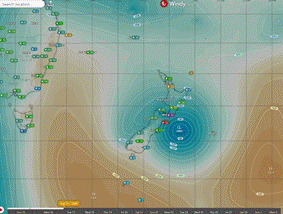
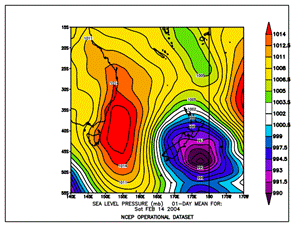
The storm on 16Feb had a weather map very similar to a storm 22 years ago on 15Feb 2004 (which damaged Manawatu):
The outlook for autumn is for a return to “normal”, allowing what I call the “Weather Jazz” pattern in which each player gets to go solo for a spell.
Bob McDavitt